Stay Informed
Join our newsletter to receive updates about our mission, impact stories, and ways you can help make a difference.

Child trafficking doesn't announce itself with violence or force. It begins quietly with a friendly message, a job offer, or a promise of something better. In cities and small towns alike, child trafficking operates through an invisible web that stretches across borders and screens. This multi-billion-dollar crime doesn't resemble the dramatic abductions we see in movies. Instead, it hides behind trusted faces, false promises, and everyday transactions. According to the United Nations Office on Drugs and Crime, nearly one in three trafficking victims worldwide is a child, and the majority are exploited without ever crossing a border.
Recruitment rarely begins with violence. Traffickers systematically exploit vulnerability, targeting children facing poverty, family conflict, or isolation those most desperate for connection or opportunity. Recruiters pose as friends, mentors, employers, or romantic interests. Online platforms like social media, gaming sites, messaging apps have become primary hunting grounds. Traffickers invest time building trust through flattery, attention, and small gifts before isolating victims from family and encouraging secrecy. Offline, they operate through fake job agencies, informal labor networks, or community members paid to identify vulnerable targets.
The tragic case of Amanda Todd illustrates how predators operate online. In 2012, the 15-year-old Canadian student died by suicide after a predator convinced her to expose herself on webcam when she was just twelve years old, then stalked and blackmailed her for years using the images. Her tormentor, Aydin Coban, was eventually sentenced to 13 years in prison in 2022, demonstrating how digital exploitation can span years and borders.
Elizabeth Frazier's case reveals another disturbing pattern: she was first trafficked by her own parents when she was just four years old, and the exploitation continued until she was 23. Data from the Counter-Trafficking Data Collaborative shows that almost half of identified child trafficking cases begin with some family member involvement, up to four times higher than in adult trafficking cases.
Contrary to popular belief, trafficking rarely involves smuggling across borders in the dead of night. Many victims are exploited within their own neighborhoods. When relocation occurs, it masquerades as legitimate opportunity a new job, educational program, or family visit.
In one documented case, agents rescued 82 children from a trafficking ring that had brought them from the Dominican Republic to the United States illegally. In another Atlanta-based operation, defendants used violence, threats, and intimidation to coerce victims into commercial sex acts across Georgia and Alabama.
Traffickers use ordinary transportation ride-shares, trains, buses. They equip victims with forged documents or pose as guardians. Because initial movement often feels voluntary, driven by promises of opportunity, victims don't realize they're being trafficked until they're already trapped, isolated, and dependent on their exploiters for basic needs.
As stated above, physical force is less common than psychological manipulation. Traffickers wield fear, shame, manufactured debt, and dependency as their primary weapons. Victims are told they owe thousands for travel or lodging, that police will arrest them as criminals if they flee, or that family members will be harmed if they speak out.
In a 2017 Georgia case, eight women were found held captive in a luxury home. The suspect, Kenndric Roberts, faced charges including false imprisonment and trafficking persons for labor. In another Atlanta case, a trafficker who committed violent sexual acts against his victims, bound them with duct tape, and took their identification to hold them captive was sentenced to life in federal prison.
Some traffickers create drug or alcohol dependency to ensure compliance. Others monitor phones, track locations via GPS, and threaten to release private photos or videos. One Atlanta sex trafficker was charged with witness tampering after continuing to harass and intimidate victims even after being indicted. This psychological warfare makes victims appear "consenting" to observers one of the greatest obstacles to detection and rescue.
Technology has transformed trafficking from a street-level crime into a sophisticated digital operation. Traffickers use encrypted apps and private forums to trade children, accepting payment in cryptocurrency to avoid detection.
In 2024, an FBI-led operation called "Operation Cross Country" located 59 minor victims of child sex trafficking and sexual exploitation, and another 59 children who had been reported missing. These coordinated sweeps demonstrate both the scale of digital exploitation and law enforcement's evolving response.
Artificial intelligence now complicates the fight further. Deepfake technology enables traffickers to forge identities and create false content, while sophisticated algorithms help them identify vulnerable targets. However, law enforcement is fighting back with AI-driven detection tools that flag grooming behaviors and illegal content before exploitation occurs.
Trafficking hides within normal routines, but patterns of behavior can reveal the truth. Warning signs include children who suddenly possess expensive items without explanation, appear fearful or overly submissive to specific adults, or avoid eye contact and seem chronically exhausted. They may lack access to their own identification, travel frequently with unrelated adults who answer questions for them, or receive gifts from online strangers who request private photos.
Children at higher risk include homeless and runaway minors, those in foster care and juvenile justice systems, children in impoverished communities with strong gang or drug presence, unaccompanied and undocumented minors, and minors whose online presence is unsupervised by adults.
Combating child trafficking requires collective action. Organizations like ECPAT International, UNICEF, and the National Human Trafficking Hotline coordinate rescue efforts and survivor support across borders. Tech companies are implementing stronger safeguards, using machine learning to detect and remove exploitative content.
For individuals, awareness and education are powerful tools. Teaching children about online safety, privacy, and manipulation tactics reduces vulnerability. Reporting suspicious behavior especially grooming attempts online can prevent exploitation before it begins.
Child trafficking thrives in silence and secrecy. Every person who learns to recognize the warning signs and speaks up helps dismantle this invisible web. The networks sustaining this crime are complex, but shining light on their methods is the essential first step toward ending them.
References:
Amanda Todd Legacy Society. (n.d.). Home. https://www.amandatoddlegacy.org
CBC News. (2022, October 14). Aydin Coban sentenced to 13 years for sexual extortion of Amanda Todd. https://www.cbc.ca/news/canada/british-columbia/aydin-coban-sentencing-october-14-1.6616874
Counter-Trafficking Data Collaborative. (n.d.). Home. https://www.ctdatacollaborative.org
Federal Bureau of Investigation. (n.d.). Operation Cross Country. https://www.fbi.gov/news/stories/operation-cross-country
International Organization for Migration. (2018, July 30). Family members linked to nearly half of child trafficking: New IOM-Polaris data. https://www.iom.int/news/family-members-linked-nearly-half-child-trafficking-new-iom-polaris-data
United Nations Office on Drugs and Crime. (n.d.). Global Report on Trafficking in Persons. https://www.unodc.org/unodc/data-and-analysis/glotip.html
U.S. Department of Justice. (2024, July 24). Operation Cross Country XIII leads to identification/location of adolescent victims. https://www.justice.gov/archives/opa/pr/operation-cross-country-xiii-leads-identificationlocation-adolescent-victims
Additional Resources:
National Human Trafficking Hotline: 1-888-373-7888 (24/7, confidential, 200+ languages)
Text: 233733
Web chat: https://humantraffickinghotline.org/en/chat
National Center for Missing & Exploited Children (NCMEC): 1-800-843-5678
CyberTipline for online exploitation: https://www.cybertipline.org
Organizations Working to Combat Child Trafficking:
ECPAT International: https://www.ecpat.org
UNICEF Child Protection: https://www.unicef.org/protection/child-trafficking
Polaris Project: https://polarisproject.org
International Justice Mission: https://www.ijm.org
Data and Research:
UNODC Global Report on Trafficking in Persons: https://www.unodc.org/unodc/data-and-analysis/glotip.html
Counter-Trafficking Data Collaborative: https://www.ctdatacollaborative.org
U.S. Department of State Trafficking in Persons Report: https://www.state.gov/trafficking-in-persons-report/
Learn More About Online Safety:
FBI's Resources for Parents: https://www.fbi.gov/how-we-can-help-you/safety-resources/sex-crimes
National Center for Missing & Exploited Children: https://www.missingkids.org/netsmartz
Join our newsletter to receive updates about our mission, impact stories, and ways you can help make a difference.

While everything becomes digitalized, seeking support is no exception. Many NGOs have followed the method of including a hotline to support victims of various types of abuse, but to know more about its effectiveness, we need to know the opinions of help seekers.

The clock is ticking. Every day we wait to address AI-generated child sexual abuse material is another day predators get ahead of law enforcement. OpenAI recently announced that ChatGPT will permit erotic content for age-verified adults. The company has framed this decision as a way of respecting adult autonomy. But this decision, opens a floodgate that could accelerate one of the most urgent threats facing children today: the explosion of AI-generated child sexual abuse material (AI-CSAM). The numbers are already terrifying. And they're getting worse by the day.

There are different kinds of ways we can use to find information about child abuse cases, BUT surveying remains one of the most effective methods. To survey child abuse, a complex process that requires strict ethical protocols and specialized methods, researchers must prioritize the safety and well-being of participants. A survey can target the prevalence of abuse in a population or be used for screening and clinical assessment in healthcare settings. HOWEVER, there are many ethical considerations before conducting such research such as age, anonymity
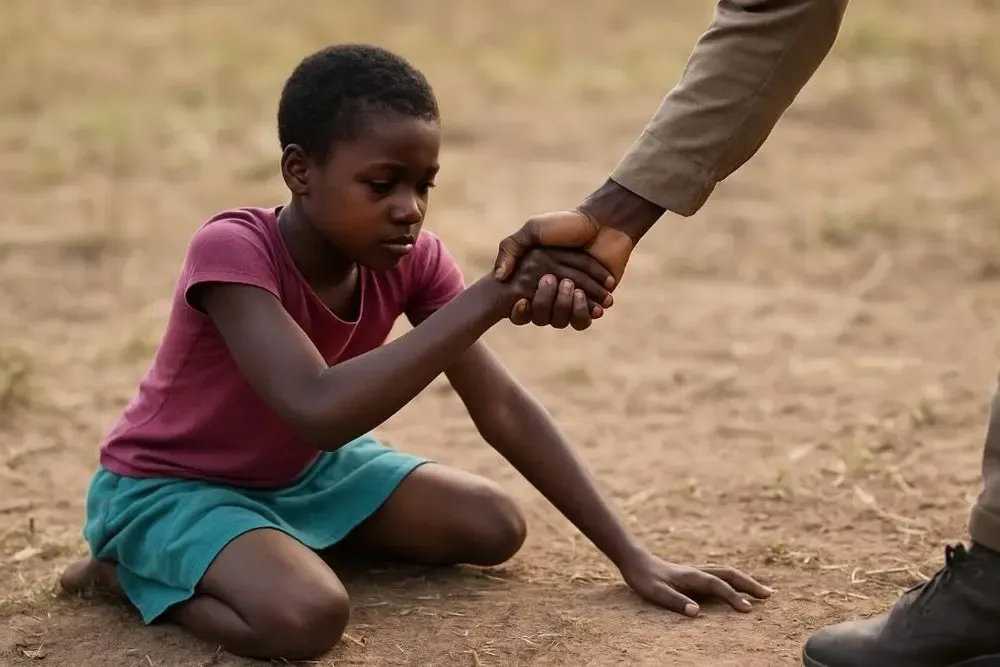
Across Africa, millions of children are growing up under the shadow of sexual violence and exploitation. Behind closed doors, in schools, in refugee camps, and increasingly across digital spaces, countless boys and girls face abuses that rob them of dignity, safety, and the promise of a better future. The crisis is urgent — yet too often invisible. It demands not only compassion but also coordinated, sustained action from governments, communities, and international partners.

Human trafficking and smuggling are deeply intertwined issues affecting millions around the globe. Smugglers often exploit vulnerable populations, luring individuals with false promises of better opportunities. As these networks become more sophisticated, law enforcement agencies face overwhelming challenges in tracking and apprehending criminals while also identifying and assisting victims. In recent years, artificial intelligence (AI) has emerged as a powerful tool in various fields, and its application in detecting smugglers and victims of human trafficking is proving to be a game changer. With the increasing complexities of global smuggling networks and the urgency of human rights issues, AI technologies are being employed to enhance monitoring, data analysis, and investigative processes. Although AI has the potential to do all these things, it has been underutilized in the field and there should be a push from NGOs and agencies to use the technology.
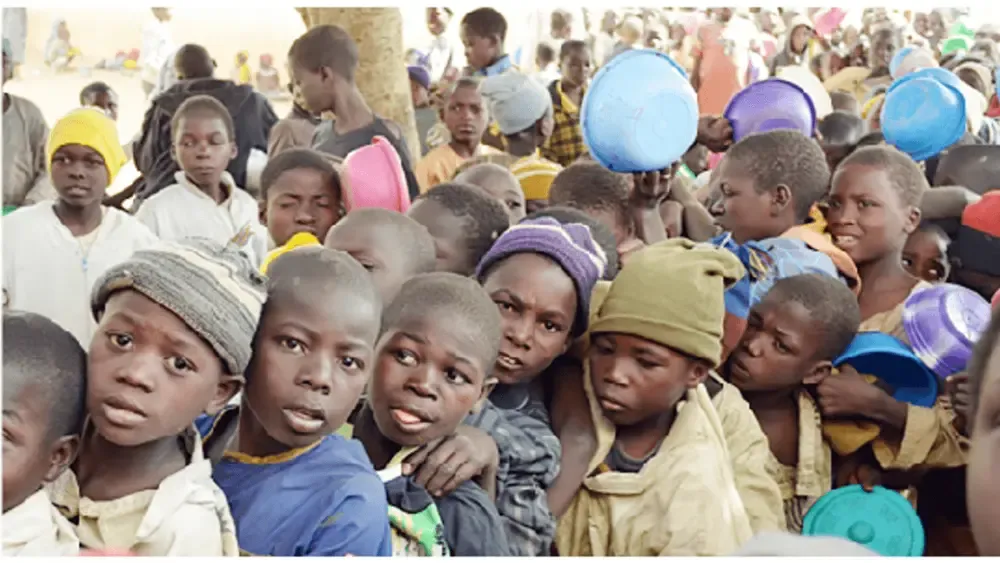
The Almajiri system is one of the oldest forms of traditional Islamic education in Northern Nigeria. The term Almajiri comes from the Arabic word al-Muhajirun, meaning “a seeker of knowledge who leaves home in pursuit of learning.” For centuries, this system produced respected scholars, leaders, and community guides.
Look into the eyes of a child. What do you see? Laughter, dreams, boundless potential. Now, imagine those same eyes filled with fear, despair, and the heavy burden of a life stolen. This is the stark reality for millions of children around the world, victims of child trafficking – a modern-day slavery that thrives in the shadows of our globalized society.
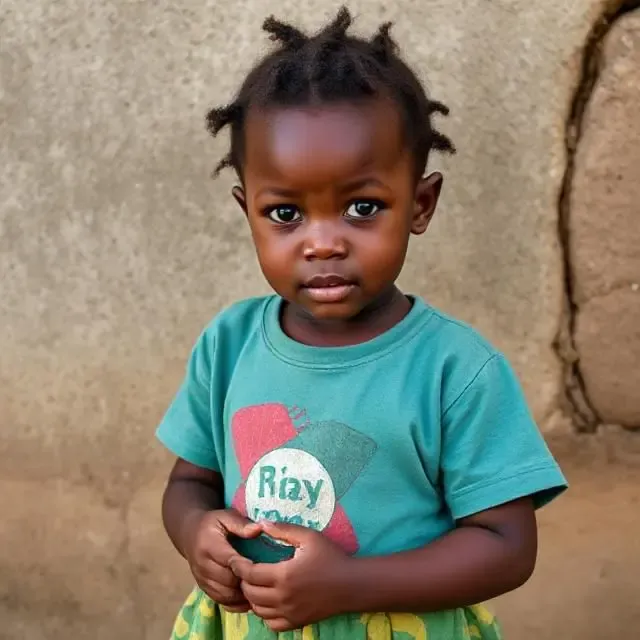
Despite that South Africa have the largest economy In Africa with the largest literacy rates, Child abuse remains a pressing issue in South Africa, The alarming statistics surrounding child abuse highlight an urgent need for society to address this pervasive problem.

Child labor has been a pervasive issue throughout history, especially during the Industrial Revolution in Europe, when the demand for cheap labor forced many children into factories, mines, and mills. As society gradually recognized the exploitation faced by these young workers, significant efforts emerged to combat child labor across the continent. Understanding how Europe addressed this social issue sheds light on the value placed on childhood innocence and education, which continues to resonate today.

Child sexual exploitation in digital spaces has evolved significantly with the rise of online gaming platforms. Gaming environments now represent a significant avenue for predators to access children, with concerning research showing grooming situations can develop in as little as 19 seconds to 45 minutes in social gaming environments.

Preventing child sexual exploitation requires vigilance, education, and systemic safeguards:

Imagine a world where every child can grow up safe, loved, and empowered regardless of their circumstances. A world free from the horrors of child trafficking, pedophilia, and exploitation. At Marianco, we're committed to making this vision a reality. We're building a future where vulnerable children are protected, their dignity restored, and their stories rewritten.