Stay Informed
Join our newsletter to receive updates about our mission, impact stories, and ways you can help make a difference.

The clock is ticking. Every day we wait to address AI-generated child sexual abuse material is another day predators get ahead of law enforcement.
OpenAI recently announced that ChatGPT will permit erotic content for age-verified adults. The company has framed this decision as a way of respecting adult autonomy. But this decision, opens a floodgate that could accelerate one of the most urgent threats facing children today: the explosion of AI-generated child sexual abuse material (AI-CSAM).
The numbers are already terrifying. And they're getting worse by the day.
This isn't a hypothetical future threat. Here are the facts and figures! According to the internet Watch Foundation (IWF) July 2024 report, over 3,500 new AI-generated child sexual abuse images appeared on a single dark web forum between 2023 and 2024. The most concerning aspect of this discovery is that the images are becoming more severe, with more depicting the most extreme Category A abuse.
In 2024 Reports of AI-generated CSAM surged 380% from 51 confirmed reports in 2023 to 245 in 2024. Each report can contain thousands of individual images. The National Center for Missing & Exploited Children received 67,000 reports of AI-generated CSAM in all of 2024 then received 485,000 reports in just the first half of 2025. That's a 624% increase in six months.
This is a major concern as Law enforcement can no longer tell what's real. In 193 of 245 reports investigated, AI-generated images were so realistic they had to be treated as if they depicted actual children being raped. The problem is that it’s difficult to justify prosecuting those who create these images, since they don’t involve real people but are instead artificial depictions.
We are losing this fight. And loosening restrictions on sexual AI content will make it exponentially worse.
These aren't just statistics. Real predators are already weaponizing AI to abuse children:
Hugh Nelson (UK, 2024)
A British man was sentenced to over 20 years in prison for using AI face-transformation software to convert normal photographs of real children into graphic sexual abuse imagery. He then sold albums of these images in online chat rooms on the open web. Nelson targeted real children turning innocent photos into nightmare fuel that will haunt those victims forever.
Steven Andereg (Wisconsin, 2025)
The first federal prosecution for creating CSAM entirely through AI. Anderegg faces charges for producing images that never depicted a real child yet prosecutors argue (correctly) that such material still harms children by normalizing abuse and fuelling demand for exploitation.
Europol Operation (February 2025)
Dozens arrested across Europe after a Danish man allegedly ran a paid platform distributing fully AI-generated child sexual abuse material. 273 suspects identified. Users paid to access content showing "children being abused." The platform's administrator allegedly produced the content using AI tools.
Between December 2024 and September 2025, prosecutors in Ventura County, California, had to drop eight cases involving AI-generated CSAM because state law required proving the imagery depicted a real child. Eight predators walked free because the law couldn't keep up with technology.
Kaylin Hayman (Disney Channel Actress)
A 17-year-old actress from Disney's "Just Roll with It" became a victim of AI-generated "deepfake" sexual imagery. "I felt like a part of me had been taken away," she said. "Even though I was not physically violated." Her advocacy helped pass California's updated law — but millions of children remain unprotected.
Why Allowing Adult Erotica Makes the Child Abuse Problem Worse
When AI systems are trained and optimized to produce sexual content for adults, five devastating side effects follow:
1. The Supply Explodes
Models designed to generate adult sexual content can be manipulated through clever prompts, jailbreaks, or outright abuse to produce sexualized images of minors. Even with filters, bad actors find workarounds. The technical capability to create erotica for adults is the same capability that creates AI-CSAM.
2. Synthetic Abuse Is Real Abuse
A dangerous myth persists: "It's not real, so it's not harmful." This is false.
AI-CSAM normalizes the sexual abuse of children
It can be used as a grooming tool to desensitize real children
It re-traumatizes survivors who see that society is creating new ways to depict their abuse
It trains and rehearses predators, lowering their inhibitions
Studies show it can stimulate offending behavior
Every child-safety organization on Earth agrees: synthetic child sexual abuse material is abuse material, full stop.
3. Age Verification Won't Save Us
OpenAI says adult content will be "age-gated," but:
Age verification systems can be spoofed or bypassed
They create new privacy and data security risks
They can't stop verified adults from creating and distributing AI-CSAM
Even Disney Channel actresses get deepfaked verification doesn't protect victims
4. Detection Systems Are Already Overwhelmed
Traditional child-protection tools rely on "hash matching" comparing new images to databases of known abuse. AI-generated content bypasses these systems entirely because every image is new and unique.
Law enforcement is drowning:
98% of AI-generated CSAM depicts girls amplifying violence against women and girls
Investigators waste time trying to identify and rescue children who don't exist
The sheer volume threatens to collapse detection and reporting systems
"We're playing catch-up to a technology that is moving far faster than we are," says California DA Erik Nasarenko.
5. Grooming and Coercion Get an AI Upgrade
Sexual chatbots can be weaponized as grooming tools:
Predators can role-play abusive scenarios and refine their tactics
AI can generate personalized sexual content featuring a specific child's likeness
Chatbots can be used to normalize inappropriate relationships and boundary violations
The line between fantasy and action blurs when AI makes abuse "feel" accessible
Every day we delay, predators generate thousands more images. Here's what needs to happen immediately:
1. Legal Clarity: All AI-CSAM Is CSAM
an AI-CSAM Is child sexual abuse material generated by AI
Every jurisdiction must unambiguously criminalize AI-generated child sexual abuse material whether it depicts a real child or not, whether it's photorealistic or cartoon-like. The law must catch up to the technology now. As of late 2025, many U.S. states still have legal gaps. Children cannot wait for lawmakers to feel comfortable.
2. Strong Age Verification
Age verification should be robust, privacy-respecting, and independently audited. But it's only a speed bump and not a permanent solution. Verified adults can still commit crimes. We need multiple layers of protection, not a single gate.
3. Mandatory Watermarking and Provenance
Every AI-generated image should carry tamper-resistant metadata or forensic watermarks. This won't stop abuse, but it will make it harder to deny and easier to trace. Investigators need tools to distinguish real photos from AI creations and to track who made what.
4. Next-Generation Detection, Funded Now
Traditional hash-matching is useless against novel AI content. We need machine learning systems that can detect patterns, styles, and content in AI-generated imagery. This technology exists. It needs funding, deployment, and mandatory use by platforms.
5. Mandatory Reporting and Transparency
Platforms must report suspected CSAM and AI-CSAM to national hotlines (like the National Center for Missing & Exploited Children in the U.S.). They must share threat intelligence with law enforcement. And they must publish transparency reports showing how much abuse they detected, how much they missed, and what they did about it.
6. Fund Victim Support and Civil Society
Survivors need resources. Advocacy groups need funding. Researchers need access. We cannot leave child protection to tech companies and law enforcement alone. Civil society must have a seat at the table and the resources to fight back.
The Bottom Line: This Is an Emergency
Treating adults like adults is a reasonable principle but not when the tool in question is a machine that can generate infinite child sexual abuse material on demand.
OpenAI and every other AI company must understand: loosening restrictions on sexual content without ironclad safeguards is reckless. We are at a fork in the road. We can act now with clear laws, strong safeguards, mandatory detection, and real consequences or we can watch as AI becomes the greatest accelerant of child sexual abuse in history.
There is no middle ground. The time to act is now.
For more information, see:
Internet Watch Foundation: IWF AI-CSAM Research
National Center for Missing & Exploited Children: NCMEC
ECPAT International: ECPAT
U.S. Department of Justice Child Exploitation Section: DOJ
References
News & Policy Sources
Reuters. (2025, October 14). OpenAI to allow mature content on ChatGPT for adult verified users starting December 2025. Retrieved from https://www.reuters.com/business/openai-allow-mature-content-chatgpt-adult-verified-users-starting-december-2025-10-14
The Verge. (2025, October 15). Sam Altman says ChatGPT will soon sext with verified adults. Retrieved from https://www.theverge.com/news/799312/openai-chatgpt-erotica-sam-altman-verified-adults
Ars Technica. (2025, February). ChatGPT can now write erotica as OpenAI eases up on AI paternalism. Retrieved from https://arstechnica.com/ai/2025/02/chatgpt-can-now-write-erotica-as-openai-eases-up-on-ai-paternalism
National Center for Missing & Exploited Children (NCMEC). (2025). CyberTipline Data Report, First Half 2025. Alexandria, VA: NCMEC.
https://www.missingkids.org/ncmec-data-reports
Internet Watch Foundation (IWF). (2025). Annual Report 2024–2025: AI-Generated Child Sexual Abuse Imagery. Cambridge, UK: IWF.
https://www.iwf.org.uk/report/2024
Europol. (2025, February). Press release: Major European operation targets creators and distributors of AI-generated child sexual abuse material. The Hague: Europol.
https://www.europol.europa.eu/media-press/newsroom
BBC News. (2024, September 9). Man jailed for using AI to create child abuse images. London: BBC.
https://www.bbc.com/news/technology
U.S. Department of Justice. (2025, March 12). Wisconsin man indicted for creating child sexual abuse material using artificial intelligence. Washington, DC: DOJ Press Release.
https://www.justice.gov/opa/pr
Ventura County District Attorney’s Office. (2025, September). AI-generated child sexual abuse cases dismissed due to legal gaps. Ventura, CA: Press Statement.
Los Angeles Times. (2025, March 3). Disney Channel actress Kaylin Hayman speaks out on deepfake exploitation, calls for stronger AI laws. Los Angeles: LA Times.
Thorn. (2024). The Rise of AI-Generated Child Sexual Abuse Material and the Urgent Need for Detection Standards. Los Angeles: Thorn.
https://www.thorn.org/blog/ai-csam-detection-standards
WeProtect Global Alliance. (2024). Artificial Intelligence and Child Sexual Abuse Material: Emerging Risks and Policy Responses. London: WeProtect Foundation.
https://www.weprotect.org/library
ECPAT International. (2025). AI and Online Child Sexual Exploitation: Global Threat Assessment 2025. Bangkok: ECPAT.
https://www.ecpat.org/resources
United Nations Office on Drugs and Crime (UNODC). (2024). Global Report on Online Child Sexual Exploitation 2024. Vienna: UN Publications.
California District Attorneys Association. (2025, August). Statement on AI-Generated Child Sexual Abuse Material and Legislative Reform Needs. Sacramento, CA: CDAA.
Nasarenko, E. (2025, September). Interview with ABC7 Los Angeles on AI-CSAM and prosecutorial challenges. Retrieved from https://abc7.com
Join our newsletter to receive updates about our mission, impact stories, and ways you can help make a difference.

While everything becomes digitalized, seeking support is no exception. Many NGOs have followed the method of including a hotline to support victims of various types of abuse, but to know more about its effectiveness, we need to know the opinions of help seekers.

There are different kinds of ways we can use to find information about child abuse cases, BUT surveying remains one of the most effective methods. To survey child abuse, a complex process that requires strict ethical protocols and specialized methods, researchers must prioritize the safety and well-being of participants. A survey can target the prevalence of abuse in a population or be used for screening and clinical assessment in healthcare settings. HOWEVER, there are many ethical considerations before conducting such research such as age, anonymity

Across Africa, millions of children are growing up under the shadow of sexual violence and exploitation. Behind closed doors, in schools, in refugee camps, and increasingly across digital spaces, countless boys and girls face abuses that rob them of dignity, safety, and the promise of a better future. The crisis is urgent — yet too often invisible. It demands not only compassion but also coordinated, sustained action from governments, communities, and international partners.

Child trafficking doesn't announce itself with violence or force. It begins quietly with a friendly message, a job offer, or a promise of something better. In cities and small towns alike, child trafficking operates through an invisible web that stretches across borders and screens. This multi-billion-dollar crime doesn't resemble the dramatic abductions we see in movies. Instead, it hides behind trusted faces, false promises, and everyday transactions. According to the United Nations Office on Drugs and Crime, nearly one in three trafficking victims worldwide is a child, and the majority are exploited without ever crossing a border.

Human trafficking and smuggling are deeply intertwined issues affecting millions around the globe. Smugglers often exploit vulnerable populations, luring individuals with false promises of better opportunities. As these networks become more sophisticated, law enforcement agencies face overwhelming challenges in tracking and apprehending criminals while also identifying and assisting victims. In recent years, artificial intelligence (AI) has emerged as a powerful tool in various fields, and its application in detecting smugglers and victims of human trafficking is proving to be a game changer. With the increasing complexities of global smuggling networks and the urgency of human rights issues, AI technologies are being employed to enhance monitoring, data analysis, and investigative processes. Although AI has the potential to do all these things, it has been underutilized in the field and there should be a push from NGOs and agencies to use the technology.
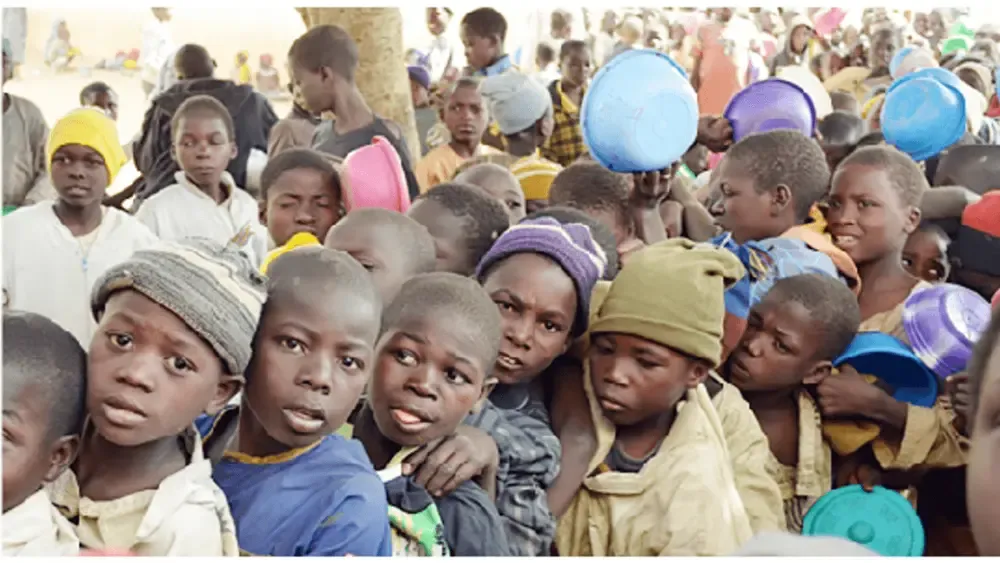
The Almajiri system is one of the oldest forms of traditional Islamic education in Northern Nigeria. The term Almajiri comes from the Arabic word al-Muhajirun, meaning “a seeker of knowledge who leaves home in pursuit of learning.” For centuries, this system produced respected scholars, leaders, and community guides.
Look into the eyes of a child. What do you see? Laughter, dreams, boundless potential. Now, imagine those same eyes filled with fear, despair, and the heavy burden of a life stolen. This is the stark reality for millions of children around the world, victims of child trafficking – a modern-day slavery that thrives in the shadows of our globalized society.

Despite that South Africa have the largest economy In Africa with the largest literacy rates, Child abuse remains a pressing issue in South Africa, The alarming statistics surrounding child abuse highlight an urgent need for society to address this pervasive problem.

Child labor has been a pervasive issue throughout history, especially during the Industrial Revolution in Europe, when the demand for cheap labor forced many children into factories, mines, and mills. As society gradually recognized the exploitation faced by these young workers, significant efforts emerged to combat child labor across the continent. Understanding how Europe addressed this social issue sheds light on the value placed on childhood innocence and education, which continues to resonate today.

Child sexual exploitation in digital spaces has evolved significantly with the rise of online gaming platforms. Gaming environments now represent a significant avenue for predators to access children, with concerning research showing grooming situations can develop in as little as 19 seconds to 45 minutes in social gaming environments.

Preventing child sexual exploitation requires vigilance, education, and systemic safeguards:

Imagine a world where every child can grow up safe, loved, and empowered regardless of their circumstances. A world free from the horrors of child trafficking, pedophilia, and exploitation. At Marianco, we're committed to making this vision a reality. We're building a future where vulnerable children are protected, their dignity restored, and their stories rewritten.