 Stationery
Hardcover Journal Matte
159 SEK
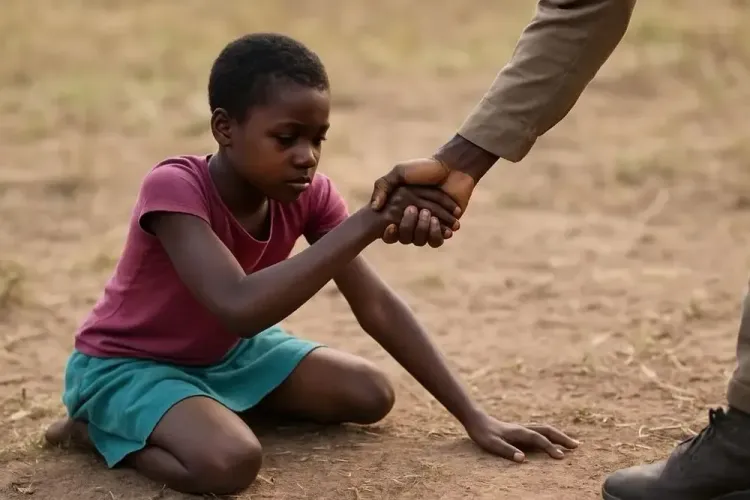
Across Africa, millions of children are growing up under the shadow of sexual violence and exploitation. Behind closed doors, in schools, in refugee camps, and increasingly across digital spaces, countless boys and girls face abuses that rob them of dignity, safety, and the promise of a better future.
The crisis is urgent, yet too often invisible. It demands not only compassion but also coordinated, sustained action from governments, communities, and international partners.
These indicators (especially underage marriage of girls) are key drivers and proxies for vulnerability to sexual exploitation.
Sources: UNICEF (When Numbers Demand Action, 2024), UNICEF child marriage country profiles, ChildFund/ACPF reports on online exploitation, and related regional policy briefs.
Niger: 76% of women aged 20–24 married before 18. Very high child marriage prevalence; vulnerability driven by conflict and poverty.
Central African Republic: 68%. Very high child marriage prevalence; vulnerability driven by conflict and poverty.
Chad: 67%. Very high child marriage prevalence; vulnerability driven by conflict and poverty.
Mali: 55%. High prevalence; conflict and displacement increase risk.
Burkina Faso: 52%. High prevalence; conflict and displacement increase risk.
South Sudan: 45%. High prevalence; conflict and displacement increase risk.
Mozambique: 48%. High to moderate prevalence; regional disparities and rising online risks.
Nigeria: 43%. High to moderate prevalence; regional disparities and rising online risks.
South Africa: 18%. Lower child marriage rate but high reported sexual violence and online exploitation.
Recent reports reveal staggering realities. According to UNICEF, more than 79 million girls and women in sub-Saharan Africa have been subjected to rape or sexual assault before turning 18. This figure likely underrepresents the true scale, as many cases go unreported due to fear, shame, or cultural taboos.
Online exploitation is growing even faster. ChildFund and its partners report a sharp increase in online sexual exploitation and abuse of children across Africa. In several countries, including Kenya, Uganda, and Mozambique, one in five children aged 9–17 have received unwanted sexual messages or requests for explicit content online.
Sexual exploitation does not occur in isolation. It thrives where protection systems are weak and children lack power or voice. Among the key drivers are:
The impact of molestation and sexual exploitation on a child can be lifelong. Survivors often face:
The damage extends beyond individuals, it undermines families, weakens communities, and slows national development.
Many African countries have made commendable progress by strengthening laws and ratifying regional frameworks such as the African Charter on the Rights and Welfare of the Child. Nations like Kenya, South Africa, and Nigeria have enacted comprehensive sexual offences laws that define and criminalize various forms of abuse.
However, the gap between policy and practice remains wide. Investigations are often delayed, cases collapse due to poor evidence, and survivors rarely receive justice or care. Reporting systems are fragmented, and protection services, where they exist, are underfunded or inaccessible.
Ending child molestation and sexual exploitation in Africa requires more than legal reform, it requires a shift in power, culture, and awareness.
1. Strengthen child protection systems: Governments must invest in social services, police training, and child-friendly courts.
2. Reach communities: Awareness programs can challenge stigma, promote dialogue, and encourage early reporting.
3. Expand survivor support: Access to counseling, healthcare, shelter, and education must be prioritized.
4. Promote digital safety: Schools and caregivers should teach children how to navigate the internet safely and report online threats.
5. Build partnerships: Collaboration between governments, NGOs, faith-based organizations, and international bodies can amplify impact and ensure accountability.
Protecting Africa’s children is not only a moral duty, it’s a collective responsibility. Each child deserves to grow free from fear, to dream, and to thrive in safety. Silence enables abuse; awareness, advocacy, and action can end it.
Every effort from reporting a case, mentoring a child, supporting survivors, or shaping policy, moves us closer to a continent where childhood is sacred and exploitation has no place.
At Marianco, we believe every child deserves safety, dignity, and a future free from fear. Through our programs in advocacy, rescue, survivor care, and awareness, we are working tirelessly to end child molestation and sexual exploitation across Africa.
How to be a Change Agent:
• Report abuse when you see or suspect it, silence protects perpetrators.
• Support survivors through donations, volunteering, or mentorship.
• Raise awareness by sharing verified information and breaking harmful taboos.
The work is protecting children, supporting families and holding abusers to account.
Join the Marianco mission today, because every child deserves protection, and every voice counts.
Allt tillverkas vid beställning. Det som blir kvar efter produktionen går till förebyggande arbete, stöd och ärenden.
Print-on-demand keeps our stock at zero, so nothing is bought that nobody wants. What is left after the item is made and shipped goes to prevention work, support for families, and the slow business of getting cases taken seriously.

One treatment has strong support across 70 randomised trials. For children below school age, care rests on two American studies older than twenty years, and Sweden has no care programme.

Reported rapes of children fell twelve per cent while assaults rose. What reporting statistics can say, what they cannot, and where the Swedish system is thinnest.

Children learn more, established across 24 randomised trials. But the field's most quoted figure does not survive scrutiny, and nobody has shown that abuse becomes less common.
Noen få ganger i året: hva vi har gjort, hva vi har lært og hva som er verdt å lese. Ingen kampanjer innimellom, og ett klikk for å melde deg av.

